SITE DESCRIPTION
OVERVIEW — WHAT MAKES THIS SITE SPECIAL
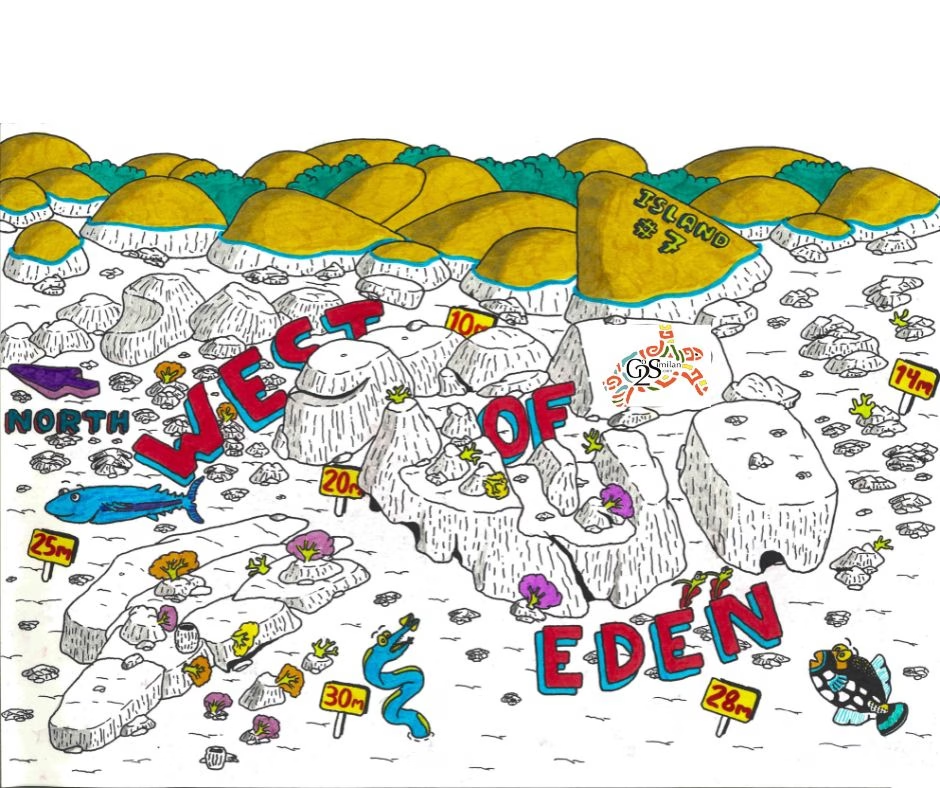
West of Eden sits on the western coastline of Similan Island No. 7 (Koh Pa-Yu) and is widely considered the best dive site on the western side of the Similan Islands. Where many Similan sites offer either a reef or a boulder dive, West of Eden delivers both in a single descent: a pristine hard coral garden in the south transitions seamlessly into a dramatic landscape of cathedral-sized granite boulders stacked into canyons, swim-throughs, and dark crevices to the north.
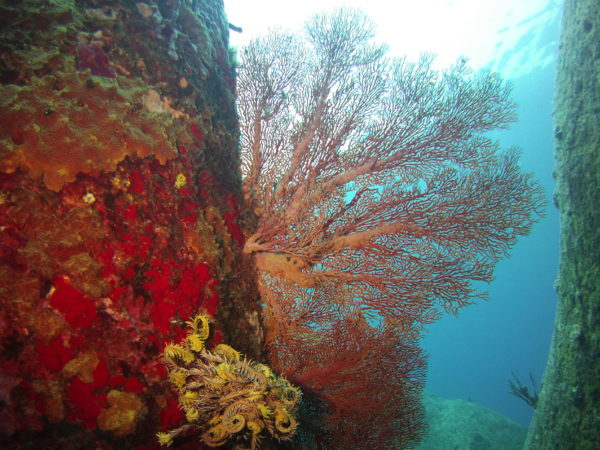
Walls and boulder faces are densely encrusted with gorgonian sea fans, soft corals, feather stars, and sponges. Add a permanent current running south-to-north and a marine life list that spans reef sharks, resident ribbon eels, ghost pipefish, and, rarely, whale sharks, and West of Eden earns its reputation as a site divers return to year after year.
DIVE ROUTE / LAYOUT
Day trip and liveaboard boats drop you approximately 200 m south of the island’s north-western tip. The entry point drops into 15–20 m of water, typically beginning in the smaller boulders and hard coral field of the southern section, or even in the bay if the current is strong.
From the entry, divers head north with the prevailing current, passing through the hard coral garden — notable for a rare mix of table corals (Acropora hyacinthus), staghorn corals (Acropora cervicornis), and brain corals (Platygyra spp.) in close proximity. As you move north the terrain rises into the boulder section, where the route threads through canyon passages and around massive granite faces covered in gorgonians. Keep your eyes on the sand at depth for ribbon eels and mantis shrimp. The dive ends drifting north towards, and on days when current is running well, the site flows naturally into a drift toward the nearby Deep Six site for air-conscious and well-timed divers.
HIGHLIGHTS & UNIQUE FEATURES
The dual personality of the site — coral garden meeting granite boulders — is West of Eden’s defining feature, rarely found in a single dive at the Similans. The boulder canyons create natural swim-throughs framed by enormous orange and purple gorgonian sea fans, some spanning more than a metre across. At around 25–28 m, a resident ribbon eel (Rhinomuraena quaesita) has occupied the same sandy crevice for several years — a reliable highlight for macro photographers. Nearby, a pair of purple fire gobies (Nemateleotris decora) hover at the crevice entrance.
One boulder in the northern section produces an audible creaking sound as it shifts slightly in current or swell — an eerie, memorable sensation mid-dive. The sand channels between boulders are productive hunting ground for spearing mantis shrimp (Lysiosquillina maculata), and ghost pipefish (Solenostomus spp.) are regularly found hovering near crinoids on the boulder walls. The rare seamoth (Pegasus volitans) has been recorded at this site, and frogfish (Antennarius spp.) are spotted with enough regularity that it is worth checking every encrusted surface carefully.